Professor Eddie Obeng's guest blogger week
for HM Government Department of Business Innovation and Skills
Public Sector Innovation Blog 1
Monday, 20 December 2010


Sunday, 28 November 2010
Do PIGS choose Big Cuts or Happiness?
 The old joke was, "What's the difference between Iceland and Ireland?" The answer: "One letter and six months", proved inaccurate but only in timescale. Last week Pentacle (Eddie Obeng on the left and Toby Scott below) completed the delivery of the Leadership4Growth programme in association with Duke CE and Enterprise Ireland.
The programme, aimed at organisations associated with the built environment, was a practical programme to help Irish construction and related organisations get up off their knees and thrive again. In the wider context hunting down the PIGS began with a G not a P - Germany leading the bailout of Greece. In parallel in the UK starting with a bonfire (of Quangos) the solution to the BIG Cuts (which for some reason the journalists insist on constantly describing as 'Painful') is to get an even BIGGER Society. The question of “How much growth is enough? - If you can't grow as fast as the BRICs then how much growth is OK? – And anyway does growth make the citizens ‘Happy’?
To be honest all this focus on austerity, cuts and innovation is desperate, worthy but probably pointless - the chances of successful change execution and delivery, if anything like the normal averages, is very, very poor. Less than 25% of change activity delivers what was expected when it was expected at the cost expected. Even less than that number actually delivers the benefits originally envisaged. Or put another way, Monday, Tuesday, Wednesday and most of Thursday are spent but are not an investment because a real investment has a return in terms of benefits.
The goal is not to have a vision or strategy - the goal is to make it reality without wasting all the resources and benefits you hope that the vision or strategy will add.

In addition to releasing a new edition of the World After Midnight podcast Eddie has written and published
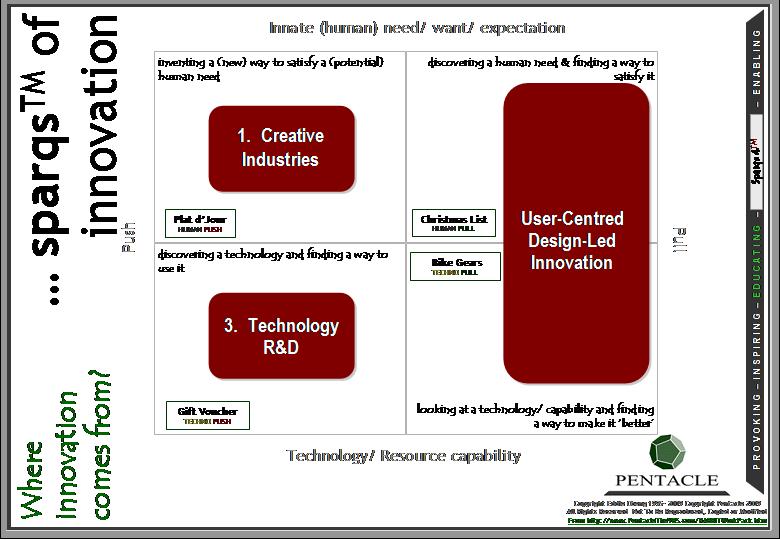
Necessity is about to become a Mother Again - To help you understand that not all innovation comes from the same sparqs and that you can select the best way of delivering innovation.
Big Cuts, Big Society, Excellent Execution and Happy Citizens - is a pragmatic but light hearted take on what would happen if the crises were being managed and delivered by Programme and Project managers rather than politicians and civil servants. It is a guide to what you should be doing yourself.
ESP - 100 Percent Perfect Projects - is a summary of the Breakthrough approach pioneered by Prof Obeng four years ago which enables delivery of huge benefits without waste. Basically it explains how you can deliver real change even though you have no money to invest by eliminating all the waste of change
The Blueprint for Transforming Strategy into Reality - How to organise for really BIG change
If I Knew Then What I Know Now… - To remind you that 21st century change in the New World is more closely aligned with sailing than driving and that the only way you can be really certain of success is to keep on track through reviews
Development. What a Monumental Waste of Time – Is a new take on developing organisational leaders for these difficult times. Moving away form the 20th century ‘Talent’ based thinking to a more appropriate solution.
So if PIGS could choose, And if the PIGS had read the articles would they choose BIG Cuts and Happiness? Webmail us here or joining the Pentacle LinkedIn Group. We think that they would.
Tuesday, 9 November 2010
Putting the human back into Business
Do you remember, not very long ago, when every customer counted and every touch point and experience was unique and personalised?
No. Neither do I. I think it is a myth brought on by watching too many heart-warming period dramas as a child. It may have been true at the corner shop, but was rarely if ever true of larger organisations.
What we recognise at Pentacle is that the environment in which organisations operate has become more complex; this may be due to globalisation, speed of communication or international competition. The more complex their environment becomes, the more those organisations are forced to adopt inflexible processes and one-size-fits all solutions that suit the organisation but rarely satisfy the consumer. They become "inhuman".
Nowadays, consumers are searching for authenticity and genuineness. These attributes do not come out of a tin marked "Humanity"; they are created by embedding a culture that places the consumer, or final user, at the heart of decision making. This means giving individual staff members autonomy and delegating power to the person who has the greatest expertise; usually the person closest to the customer.
At Pentacle, we are educating and enabling organisations to create and deliver authenticity to their customers by helping their employees to increase their capacity to manage complexity without becoming slaves to process or getting caught in the headlights of change.
We are helping companies to put the human back in their business.
Friday, 15 October 2010
Do you feel lucky, punk?
For many organisations the solution to the question, "How do we generate more innovation?" has a very simple answer. The answer is "Generate more ideas!" So a lot of organisational time and resource is dedicated to this in the hope that if they get enough ideas they will "Get Lucky".
But being lucky in generating ideas is not enough. Even a 'killer idea' is at risk of getting killed by the people across the organisation. Why? Because it was not-invented-here, because it means change, because they don't like the sound of it because they are human beings, because the senior management are cynical and won't support it, because the 'killer idea’ originated with a client need and there is no obvious part of the organisation which knows what to do with it, because executing an innovation project which is not completely locked-down doesn't work with the stage-gate or project management process, because we can't create the business case, because.... and the list continues. So they often react negatively against it and jump on it and block it doing their best to 'kill it'.
So unless the organisation is very, very lucky - so lucky in generating ideas and so lucky in having people who not only let the idea pass but actually work on it to realise it the goal of 'Generating more innovation' - it simply does not come to life.
 Imagine if instead of ‘hoping for luck’ we found out the places and things which caused the demise and death of all the 'unlucky' ideas. And imagine if we could then systematically remove the causes of the 'bad luck', we would be able to generate a significant amount of innovation without first having to be lucky. This is what Allianz, one of the UK's largest and best known insurance companies has done. Using the Pentacle R.A.B.B.I.T. Model, the Strategic Innovation Unit led by Jeremy Trott and sponsored by Philip Gennoy have transformed the delivery of innovation at all levels, from micro team-based opportunities to company changing strategic challenges.
Recently, David Lomas has joined the Pentacle team of Eddie Obeng, Christophe Gillet and Colin Burns who worked with Allianz at the inception of its i2s programme. David has been working with Jeremy and his team to develop Version 2.0 of the successful programme which has generated amazingly large numbers of new innovations and more importantly significant financial returns for Allianz.
So the choice is up to you. You can continue to be 'one of the herd', a typical organisation that approaches innovation-by-the numbers, hoping to get lucky. Or realise that you can systematically innovate for real returns with out having to be lucky at all.
 Well, do you feel lucky?
But being lucky in generating ideas is not enough. Even a 'killer idea' is at risk of getting killed by the people across the organisation. Why? Because it was not-invented-here, because it means change, because they don't like the sound of it because they are human beings, because the senior management are cynical and won't support it, because the 'killer idea’ originated with a client need and there is no obvious part of the organisation which knows what to do with it, because executing an innovation project which is not completely locked-down doesn't work with the stage-gate or project management process, because we can't create the business case, because.... and the list continues. So they often react negatively against it and jump on it and block it doing their best to 'kill it'.
So unless the organisation is very, very lucky - so lucky in generating ideas and so lucky in having people who not only let the idea pass but actually work on it to realise it the goal of 'Generating more innovation' - it simply does not come to life.
 Imagine if instead of ‘hoping for luck’ we found out the places and things which caused the demise and death of all the 'unlucky' ideas. And imagine if we could then systematically remove the causes of the 'bad luck', we would be able to generate a significant amount of innovation without first having to be lucky. This is what Allianz, one of the UK's largest and best known insurance companies has done. Using the Pentacle R.A.B.B.I.T. Model, the Strategic Innovation Unit led by Jeremy Trott and sponsored by Philip Gennoy have transformed the delivery of innovation at all levels, from micro team-based opportunities to company changing strategic challenges.
Recently, David Lomas has joined the Pentacle team of Eddie Obeng, Christophe Gillet and Colin Burns who worked with Allianz at the inception of its i2s programme. David has been working with Jeremy and his team to develop Version 2.0 of the successful programme which has generated amazingly large numbers of new innovations and more importantly significant financial returns for Allianz.
So the choice is up to you. You can continue to be 'one of the herd', a typical organisation that approaches innovation-by-the numbers, hoping to get lucky. Or realise that you can systematically innovate for real returns with out having to be lucky at all.
 Well, do you feel lucky?
Monday, 27 September 2010
Home is where the Heart B.E.A.T. is!
Ghana is changing, and the executive team at Home Finance Company Bank (HFC Bank) in Accra, Ghana, have been quick to recognise this and are rapidly changing and expanding their business.
HFC Bank and their Human Resources Manager, Mr Emmanuel Adom are not content with, “Doing what they have always done before”. In their business world, where the pace of change is faster than their ability to learn, they are ready to put into practice New World Thinking.
.jpg) To help the Executive Team to more effectively lead the changes in HFC Bank, Pentacle Tutor Kwame Akuffo went 'back home' to Ghana - where he was born. He used a series of workshops to help the executives learn that they needed to develop several leadership styles in order to cope with all the multiple challenges of their business environment - and come out on top.
To help the Executive Team to more effectively lead the changes in HFC Bank, Pentacle Tutor Kwame Akuffo went 'back home' to Ghana - where he was born. He used a series of workshops to help the executives learn that they needed to develop several leadership styles in order to cope with all the multiple challenges of their business environment - and come out on top.
Kwame Akuffo facilitated the creation of personal development plans, devised to equip the managers for the surprises challenges and opportunities times that lie hidden in the future for HFC Bank.
.jpg) Participants learnt that in order to drive change, leaders must first look closer to 'home', actually to themselves and establish a B.E.A.T. They need to look at their own Behaviours and the paradigms that underpin those behaviours, Emotionally engage the hearts and minds of their teams, take Action with real courage and Think clearly about the challenges that lie ahead. The managers at HFC Bank really committed to adopting this approach and making it central to their leadership approach. So Kwame left them with the BEAT proving that for him, "Home really is where the Heart B.E.A.T. is!
Participants learnt that in order to drive change, leaders must first look closer to 'home', actually to themselves and establish a B.E.A.T. They need to look at their own Behaviours and the paradigms that underpin those behaviours, Emotionally engage the hearts and minds of their teams, take Action with real courage and Think clearly about the challenges that lie ahead. The managers at HFC Bank really committed to adopting this approach and making it central to their leadership approach. So Kwame left them with the BEAT proving that for him, "Home really is where the Heart B.E.A.T. is!
HFC Bank and their Human Resources Manager, Mr Emmanuel Adom are not content with, “Doing what they have always done before”. In their business world, where the pace of change is faster than their ability to learn, they are ready to put into practice New World Thinking.
.jpg) To help the Executive Team to more effectively lead the changes in HFC Bank, Pentacle Tutor Kwame Akuffo went 'back home' to Ghana - where he was born. He used a series of workshops to help the executives learn that they needed to develop several leadership styles in order to cope with all the multiple challenges of their business environment - and come out on top.
To help the Executive Team to more effectively lead the changes in HFC Bank, Pentacle Tutor Kwame Akuffo went 'back home' to Ghana - where he was born. He used a series of workshops to help the executives learn that they needed to develop several leadership styles in order to cope with all the multiple challenges of their business environment - and come out on top..jpg) Participants learnt that in order to drive change, leaders must first look closer to 'home', actually to themselves and establish a B.E.A.T. They need to look at their own Behaviours and the paradigms that underpin those behaviours, Emotionally engage the hearts and minds of their teams, take Action with real courage and Think clearly about the challenges that lie ahead. The managers at HFC Bank really committed to adopting this approach and making it central to their leadership approach. So Kwame left them with the BEAT proving that for him, "Home really is where the Heart B.E.A.T. is!
Participants learnt that in order to drive change, leaders must first look closer to 'home', actually to themselves and establish a B.E.A.T. They need to look at their own Behaviours and the paradigms that underpin those behaviours, Emotionally engage the hearts and minds of their teams, take Action with real courage and Think clearly about the challenges that lie ahead. The managers at HFC Bank really committed to adopting this approach and making it central to their leadership approach. So Kwame left them with the BEAT proving that for him, "Home really is where the Heart B.E.A.T. is!Sunday, 19 September 2010
The Precariat? NOT an early orange root vegetable!
Yes, it's a new buzz-word to us as well. It seems to be a concatenation of "precarious" and "proletariat". French sociologists a couple of decades ago used the word to describe a new class of 'unprotected', temporary or seasonal workers. It has since been adopted by the Japanese to describe workers who choose the flexibility of short-term contracts and temporary work rather than bow to the established job-for-life tradition of the 'salaryman'. Like them, we see these people as a critical part of the "virtual team" within an organisation that allow it to be flexible enough to respond to rapid change.
 Toby Scott, Director of Pentacle Ireland, will be provoking the audience, by proposing how the pace of change in the New World means that the Precariat will become the dominant employment group over the next decade or so, at a free symposium in Dublin arranged by GradCam, the Graduate School of Creative Arts and Media on Friday 24th September. Toby plans to then educate the audience on how to respond to the change and benefit from it.
Uproot yourself and join Toby if you can!
 Toby Scott, Director of Pentacle Ireland, will be provoking the audience, by proposing how the pace of change in the New World means that the Precariat will become the dominant employment group over the next decade or so, at a free symposium in Dublin arranged by GradCam, the Graduate School of Creative Arts and Media on Friday 24th September. Toby plans to then educate the audience on how to respond to the change and benefit from it.
 Uproot yourself and join Toby if you can!
Saturday, 4 September 2010
Leadership in Crisis or Crisis in Leadership?

Friday, 3 September 2010
Let's Talk Again - Welcome to the World After Midnight Version 2.0
 Have you ever experienced that moment, when the drawing of the old witch transforms into a young lady? Or stared at a Magic Eye picture of coloured dots to suddenly see a butterfly emerge? Or that moment in the film The Matrix when Neo sees the data that makes the world in zeros and ones?
The next nine minutes will transform how you see the business and economic world around you. Things will never be quite the same again.

Welcome to the New World After Midnight....
NOTE: You can download a version from http://worldaftermidnight.com/
Sunday, 6 June 2010
Leading Others to Make Practical CHANGE in the Team and Organisation
Eddie Obeng and Robert Hewins have been working on an informal Pentacle survey of over a thousand managers and executives to find out what they feel their key learning needs are. The result was this wordle

Saturday, 22 May 2010
Eddie for President - But don't tell him...

There was a strange result in the Pentacle LinkedIn home page - It seems that people viewing Eddie Obeng's profile had him mixed up with someone else....
Monday, 15 March 2010
Redesigning Business for the 21st Century

Pentacle has actively been developing and communicating a rethink of how businesses can work and succeed in these volatile times. To overcome the waste and inefficiencies which large companies face on a daily basis, Robert Hewins has developed the SpinCastingTM Programme. Through effective, disciplined communication between and within virtual teams, SpinCastingTM saves global businesses millions through dramatically improved management and workforce productivity, lowered travel costs and improved project delivery. With SpinCastingTM concepts, methods and supporting technology, the end finally is in sight for dead-end video and conference calls with low active participation, short attention span and distractions such as email. Eddie Obeng has been sharing this New World approach with delegates at the Economist Big Rethink Summit more...
Tuesday, 2 March 2010
Inspiration Monthly Schedule for 2010
 Designed with issues and materials in mind that link New World principles to the fast-moving events around us, the 4th edition of Pentacle's Inspiration Monthlies is brimming with thought-provoking, relevant and pragmatic ways to fulfil our 2010 theme of Finding Possibilities.
Continuing our commitment to Open Source Learning, Pentacle Inspiration Monthlies are open to all, wherever they may be situated.
Inspiration Monthlies run for two hours (18:00 UK - 20:00 UK) on the evening of the THIRD Thursday of each month when you will get a chance to sit around with stimulating people and be provoked, challenged and enlightened by the Pentacle Team.

Tuesday, 2 February 2010
Be Economical with your Design Re-Thinking
Design was put firmly at centre stage in the strategic direction of business at the Economist Big 
 Rethink - Redesigning Business Summit. The Summit Conference which was closed by Sir George Cox and Robin Bew saw contributions from leading thinkers and practitioners such as Jonathan Sands of Elmwood - who explained how Elmwood had embraced and understood the opportunities in the BRICs, about how design and branding had turned 'Muck into Brass' at Serious* and left us laughing at his alpacas, Joe Ferry of Virgin - who drew a strong link between design and financial return and concluded with a picture of a goose and golden egg. Joe forgot to mention that Virgin provide the most comfortable and effectvie earplugs of any long haul carrier! Paul
  Bennett of IDEO made the audience rethink the 'purpose' of their businesses. And there were many others. There was an Innovation Masterclass by Professor Eddie Obeng and Friends from the Design Council , and what brilliant friends they were. Richard Seymour of Seymour Powell explained the true essence of design, David Kester CEO of the Design Council used the iconic Design Bugs Out! project to explain how design could transform
  the public sector and Bonnie Dean used her vast experience of commercialising design and examples of new market opportunities which arose from Designing Out Crime in the mobile telephony sector to show how design could create and drive new markets.

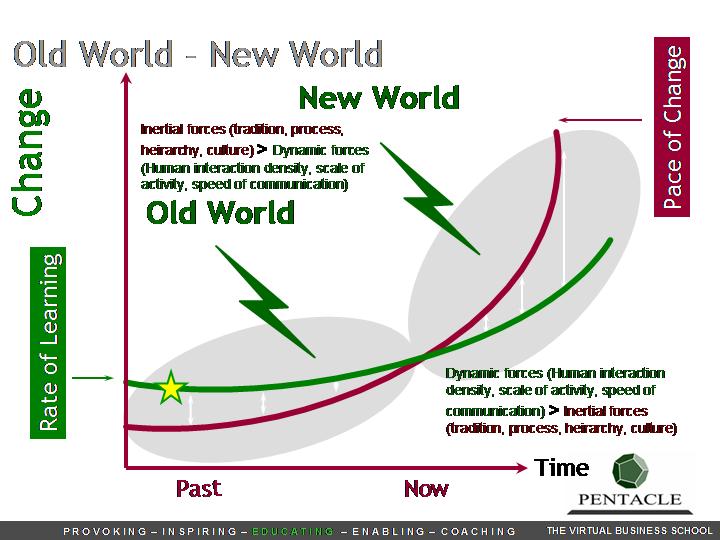
The audience and Economist Bloggers warmed to the key models, Old World vs New World, The SparqTM map of innovation, the Double Diamond which resolves the New World issue of problem defintition and the Design council Safe Space as a way of bringing together many different interests skills and ideas quickly to deliver surprisingly good, amplified results.

 Rethink - Redesigning Business Summit. The Summit Conference which was closed by Sir George Cox and Robin Bew saw contributions from leading thinkers and practitioners such as Jonathan Sands of Elmwood - who explained how Elmwood had embraced and understood the opportunities in the BRICs, about how design and branding had turned 'Muck into Brass' at Serious* and left us laughing at his alpacas, Joe Ferry of Virgin - who drew a strong link between design and financial return and concluded with a picture of a goose and golden egg. Joe forgot to mention that Virgin provide the most comfortable and effectvie earplugs of any long haul carrier! Paul Bennett of IDEO made the audience rethink the 'purpose' of their businesses. And there were many others. There was an Innovation Masterclass by Professor Eddie Obeng and Friends from the Design Council , and what brilliant friends they were. Richard Seymour of Seymour Powell explained the true essence of design, David Kester CEO of the Design Council used the iconic Design Bugs Out! project to explain how design could transform
  the public sector and Bonnie Dean used her vast experience of commercialising design and examples of new market opportunities which arose from Designing Out Crime in the mobile telephony sector to show how design could create and drive new markets.
The audience and Economist Bloggers warmed to the key models, Old World vs New World, The SparqTM map of innovation, the Double Diamond which resolves the New World issue of problem defintition and the Design council Safe Space as a way of bringing together many different interests skills and ideas quickly to deliver surprisingly good, amplified results.
The Leader is a Black Horse called Resilience

The National Exhibition Centre in Birmingham was the venue for a fast paced journey into exploring Leading with Personal resilience.
Professor Eddie Obeng led five hundred managers from Lloyds Banking Group Retail through a fast paced gallop which took in all the key aspects of how to maintain Personal Resilience in the face of complex and significant changes.
Monday, 4 January 2010
Moving from Opportunities to Possibilites...

Late in 2008, at Pentacle, we realised that around the globe the industrial/ post , industrial 'nomadic, hunter-gatherer' phase was officially over. Senior executives were starting to recognise that they couldn't identify opportunities for growth. In fact they were finding it hard to identify any opportunities at all. We launched the World After Midnight podcast to try to help them to realise that this was to be expected and in fact they had prolonged the hunter-gather illusion through two decades of M&A and Financial Black Magic which had now largely unravelled. For 2010 we are planning to help our clients move onto to the modern 'next phase' of thinking and acting. We have celebrated the start of the decade with two messages.
The first is a computer created composite from Christophe Gillet which we turned into a new year card which explains simply the two mindsets when applied to markets. You can download a copy to send to your boss or colleagues here. Then we had Susan Obeng's painting, in the style of Matisse, titled IMAGINE A FISH which encourages exploration and innovation. You can download this here. The additional lines to the traditional proverb which explain why, before you can teach a man to fish, you must first IMAGINE A FISH can be found here.

Subscribe to:
Posts (Atom)
.svg/2000px-My_Wife_and_My_Mother-In-Law_(Hill).svg.png)


 Posts
Posts