Monday, 21 April 2014

Can you see the new "World After Midnight"?

 
Have you ever experienced that moment, when the drawing of the old witch transforms into a young lady? Or stared at a Magic Eye picture of coloured dots to suddenly see a butterfly emerge? Or that moment in the film The Matrix when Neo sees the data that makes the world in zeros and ones?


The next nine minutes will transform how you see the business and economic world around you. Things will never be quite the same again.

 
Welcome to the New World After Midnight ...


NOTE: You can download a version of this video from http://WorldAfterMidnight.com/

Tuesday, 15 April 2014

Time Travellers use Social Media to stay out of touch


In his latest blogpost, Professor Eddie Obeng issues a challenge to all social media sites: "Let's make Social Media really Social".  Eddie seems to think that there is a big mistake with early 21st-century social media. 


He writes of his love for 'swooshing and swiping' his screens, hearing in his head the god-like voice of Patrick Stewart as Captain Picard, commanding the device to “Make it so”. And it happens!  Bigger, smaller, up, down.  But then he complains that all the swooshing and swiping isn't natural or human, but is fun and extremely rewarding.  

He describes how we love broadcasting to the world and updating our timelines, describing how "somewhere inside my head I feel like a celebrity, imagining all the adoring fans who are following my every word, every tweet.  (In reality it's just one or two friends who I bug until they respond.)  And it sort of happens!  Diagnostics tell us the hits, people tell us their likes (and dislikes).  It’s not interaction, it’s not banter, it’s not a real emotional and creative discourse, but it is fun and rewarding."

Eddie then gives us an insight into the strategy for the development of QUBE, the world's first collaborative-learning social medium for executives and managers.  He says: "When we began developing QUBE, I was adamant about many things.  Mostly that it replicated as much as possible the grown-up business environment with the Trojan horse of learning disguised at its core, so that we could achieve the vision of learning without boundaries.  I had in mind a Lloyds-style coffee house atmosphere (important to be able to breakout and have sub-conversations) mixed with a Leonardo da Vinci-style artist's studio, with younger artists learning and applying the skills they needed, showing their sketches to each other, sharing their experiments with each other and surpassing their teacher."  He claims that "This is human, this is interactive, it’s banter, emotional and creative, and it’s fun and rewarding."

Having begun to make his case against social media, Eddie invites us to watch his Google Zeitgeist talk, where he describes how 21st-century people have stuck to 19th-century habits of commuting, so that people leave a home well-equipped with the latest computer, super-fast broadband and 21st-century tech to travel to an office with a slow, locked-down 20th-century computer connected to the internet through a piece of wet string!  He calls commuters ‘Time Travellers’, as they travel back and forward covering a distance of 200 years in an hour!

Eddie then insists that by sticking to our old habits we have no chance of creating real demand for what he calls Social Media 2.0.  He states that "As long as we continue to pursue the 19th-century habit of moving atoms (our bodies) instead of electrons, we will have lots of boring, low-quality time on trains, in queues and in cars.  This boring time we will fill using our mobile devices to interact with data.  Why?  Because although it’s a lower grade experience than interacting with people, it’s better than getting bored.  And it avoids the potential awkwardness of social interaction or interrupting what a friend is doing (nothing, they are just composing a text to you!).  So we broadcast asynchronously.  And we read, and we watch cat videos selectively.  It’s not interactive, it’s not banter, it's not emotional and creative, but it is fun and rewarding."

Finally, he suggests that the real challenge for Facebook, Twitter and other social media is their business model.  By operating a business model where the asynchronous, non- verbal, typed-up data generated by users is the key source of revenue, they are trapped in the mode of intermediaries, keeping us apart and out of touch so that they can collect and track the data we provide.  
He ends by saying: "I hope that Facebook 2.0, Twitter 2.0 and other early 21st-century social media platforms will begin to go the same way as QUBE,  finding ways to allow people to interact over and above the data-driven activities. ... I do hope they will try to reinvent themselves. Because I for one don’t want to interact with data, I want to interact with people."

If you wish to comment on the original article, please follow the link here

Monday, 14 April 2014

Go slow to go much faster!

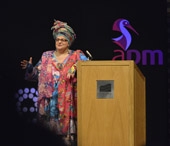
Professor Eddie Obeng had the pleasure to join Camila Batmanghelidjh, Founder of Kids Company and the opening speaker at the 2014 Association for Project Management (APM), at the annual conference.  Eddie, Winner of the 2011 Sir Monty Finniston Award for his contribution to project management, is the founder and learning director of Pentacle, the world's first Virtual Business School.  Eddie also created Pentacle QUBE, the first 3D, fully-immersive, educational-social media platform. 

The APM website describes his session: "The founder of the world’s first virtual business school, Pentacle, didn’t disappoint as he took the audience on a motivational, entertaining and interactive journey through the day’s experiences, recognising the importance of people in project management and the future roles they will play.

"Asking the audience to set the agenda for his speech with questions, he told delegates to look at the people aspect and ‘step into their shoes’. 'We need to engage our people and put fire in their bellies,' he said, 'it is then likely that they will go and do something amazing.'

"And he called on project managers to 'stop thinking about not changing' but to make some space for themselves too. 'Take the time to ground yourself. Find something that will help you refocus and then help you go forward.'

"Telling project managers they need to build trust, by slowing down and minimising surprises, he added: 'Going slower means engaging and involving people and building their trust before executing the project.'

"On closing he had these words for all involved in the profession and their future projects, echoing the APM vision of a world in which all projects succeed.
'There is no reason why projects can’t be perfect,' he added, 'It is possible and we are learning how to achieve this right now. We are the ones who change the world.'"

CALLS TO ACTION!
  •  Get ready to join Eddie for conversation ZERO on how we will together create a 'World Where Every Project Succeeds', or for one of his open enrolment Inspiration Monthly sessions.

It's time to evolve ...

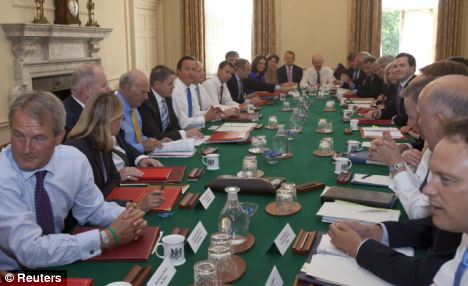
In a recent blogpost, Professor Obeng explains how, flicking through a dead-tree newspaper, he came across a picture (see bottom of post) that reminded him of an exercise he used to use to explore how innovative participants' organisation were.

He describes the land of Caprona, inhabited by pterodactyls, dinosaurs and weird sea monsters.  A land where somehow, although the world had moved on and evolution had happened, Carpona had avoided real change altogether.

The quiz has been reproduced below; the question is
"How long ago was the most recent thing in this picture invented?"  

"... and what was it ?" 


A. The Clock on the Mantelpiece: 14th century
B. Paper: 105 CE
C. Glasses: 1890
D. Suits: 1811
E. Chairs: 10th century BCE
F. Graphite writing implements: 1565  
G. Pens: 4th century BCE
H. Chandeliers: 5th century
I. The dye/colouring used in the hair of one of the participants: 1960s?


So, "How long ago was the most recent thing in this recent picture invented?" 

It looks as if not much has changed in the 'corridors of power' over a couple of decades, not even a nod to the 21st century, and here's why.

Apparently, evolution happens because of the 
dynamic, continuous changes which influence the survival and co-dependence of different species.  Without external threats or with the ability to dominate the surrounding environment or ecosystem, there is no need to evolve.  As a result the more power you have, the less likely it is that you are transforming yourself or your organisation to meet the challenges of the new world.  This means that the better your market or leadership position, the more at risk you are of being left behind in our new world. 


For our world after midnight there are three choices: evolve, dominate or die. 

Friday, 21 February 2014

What’s it like using QUBE?


To read the first part of this series, click here.

Using QUBE, like anything, takes a short period of adjustment.  Dayner Proudfoot, PR and marketing manager, Association for Project Management (APM), takes up the story: "Using a virtual environment can feel a little bit peculiar to start with, but we soon got used to it.

“With the help of a quick but thorough orientation”, adds Proudfoot, “we started to feel that using virtual technology to meet and work together in small groups was a really good and effective way to collaborate.” The consensus was that for a virtual conference to succeed, it needed to be planned virtually.  Owain Wilson, Web and Media Manager, APM, agrees: “Regular meetings (we called them ’DrumBeetsTM’) are all absolutely vital to keep the project going – when you meet more regularly, it really helps to keep things moving along.”

A different working environment also throws up different ways of working together, ways that were to prove more effective.  QUBE uses tools and techniques designed by Pentacle to make the most of these benefits.  The Pentacle tools are described by Proudfoot as: “Light touch, very iterative and fast moving.” One example of these techniques was “Hopes&FearsTM”, in which participants are able to express what they hope will be the outcome of a meeting - and what they honestly fear may result if the meeting goes badly.  Too many meetings face-to-face are held in a confrontational format, where a physical presence and entrenched positions can only create feelings of intimidation and victimisation.  Expressing hopes and fears, far from bringing unwanted emotions to the table, has the opposite effect in a virtual environment.  Rather than reinforcing entrenched positions, it helps participants to realise that perhaps they have a more common agenda than perhaps might have been first realised.  Wilson puts it well: “I think ‘Hopes&FearsTM’ produced more relaxed meetings.”

The experience of Pentacle tutors of working in a virtual environment was another crucial factor to more effective planning and meetings.  Proudfoot was impressed by the skills of facilitation: “Facilitation in a virtual environment should not be heavy-handed or bureaucratic in any way.  At its best, it encourages a mix of opinions, leading to focused decisions in meetings.” And best practice in a virtual environment has beneficial spillover effects in the real world.  Wilson argues that Pentacle’s skill in facilitating a virtual environment lies in the way they develop conversations where people are not physically in each other’s presence: “It feels a bit like a magic recipe for pastry.  All the ingredients are jumbled up in a way no one has ever tried.  We make mistakes along the way but somehow what comes out tastes delicious.  And in the process we learn together and laugh together.”

Next week: using QUBE as the conference approaches.

Monday, 17 February 2014

Getting to ZERO: A World in Which All Projects Succeed

Would you like to be part of a world where every project succeeds? Of course you would. The Association for Project Management (APM) certainly does - and they know a thing or two about the subject.

Pentacle the Virtual Business School, led by Prof Eddie Obeng, joined forces with APM in 2013 to host a conference with an unashamedly idealistic objective - to work out how to eliminate failed projects altogether.  Their aim was effectively to get to ZERO – or create a world in which all projects succeed.

To put together the conference was a six-month project in itself, starting in mid-April 2013. And so this and subsequent blogposts chart the attempts of APM and Pentacle to plan, organise, host and deliver a one-day conference in mid-October 2013.

The reality for APM and its 20,000 members is that: –

• Many projects fail;
• Successful practice in project management is frequently ignored; and
• Professional project management skills are in short supply.

Part of the reason for project failure comes down to the flaws of traditional working environments. So APM and Pentacle agreed to try something radical – to conduct all elements of preparation for and the hosting of the conference itself within QUBE - a revolutionary, completely immersive, virtual environment for business. QUBE is a highly effective way for business people to go online to run their companies via board, planning and delivery meetings and in the process to innovate, collaborate and have fun. It’s like a company headquarters on the web, with new ways of sharing ideas plus great tools and techniques to help get things done.

APM and Pentacle decided to start by holding regular planning meetings, called Drumbeats, in this virtual environment. They enjoyed some obvious anticipated benefits from using QUBE  - the two organisations were based in different locations and this saved on travel time – but quickly discovered other significant gains. The conventional business wisdom is that face-to-face meetings are preferable and more effective than telephone or video conferencing, but the working group quickly discovered that there were aspects to virtual working in QUBE that created more productive meetings, with the virtual environment helping to focus attention to the task at hand and with few distractions. This helped the team move more quickly and effectively.

So how did working on QUBE help? Click here to find out.

Friday, 31 January 2014

Dream or nightmare? You decide.

Image courtesy of
imagerymajestic/
FreeDigitalPhotos.net
It’s nearly midnight and you’re tired. It’s been a tough day at work - you and your team have been struggling recently. Everyone’s trying hard, but events keep moving on before you can work out how to respond. As you drift off to sleep, you remember the boss’s final words: “Bring everyone together for a 'Big Conference' to get back 'on top of things'.” What things? Certainly not the daily things that will still need doing while you’re all away somewhere else, or the budget that the same boss wants you to cut to hit team targets.

So, will you be having dreams or nightmares tonight?

Here is the nightmare. Some of the widely-spread team with a distance to travel don’t even want to meet, too busy struggling with their daily tasks to waste precious time talking rather than doing. Even those that do use the opportunity to avoid making decisions - everything will be decided anyway at the “Big Conference.” Resentment and inertia grip the team and everyone seems tense. You co-opt a reluctant team member to set up the event. He organises venue, flights and accommodation – it’s a big and costly task. The event seems to go OK: you capture some good ideas on the flipchart and leave with a vague sense of wellbeing.

A week later, your PA asks you to decipher the flipchart. You promise to when you get more time to remember. A month later, your boss asks you what the “Big Conference” achieved. Your reply doesn’t convince either of you. Six months later, she cuts your budget in half. A year later, you’re working harder than ever to cover and recruit to replace colleagues who recently left the organisation. Exit interviews show they liked their colleagues, but found it difficult to get anything done.

Here is the dream. The world is changing faster than you can learn. You can’t change the world, so you decide to change your approach. You ask one of your team to sketch out (roughly – a quick “guess-timate” will do) the likely cost a “Big Conference”, then tell your boss confidently you can save the company this money. You ask your team for ideas for working together more effectively, more creatively and feeling more engaged. Some are encouraged to brainstorm alternative ways to collaborate, while others are asked to suggest their own “drumbeat” sessions - how often they should meet to air new challenges and keep projects moving along quickly. The team come up with far more ideas than you ever expected, and suddenly you recall reading about something called QUBE …


Whether you have nightmares or dreams in your World After Midnight is your choice. The dream is, in fact, a reality. Many leading companies are already using QUBE. It’s the ultimate medium for a world changing faster than it learns - a revolutionary, completely immersive, virtual environment for business. It’s a highly effective way for business people to run companies, innovate, collaborate and have fun. It’s like a company headquarters on the web, with new ways of sharing ideas plus great tools and techniques to help get things done. Over the coming weeks, we will be blogging on the experience of working and holding regular meetings and a conference on QUBE, with the help of our colleagues at the Association for Project Management.

The story unfolds …

Tuesday, 7 January 2014

When you can't make it into the office, don't end up going round in Merkels ...

A mock up of Angela Merkel on QUBE
An artist's impression of Angela Merkel
engaging in immersive virtual working.
As the first female chancellor of Germany, Angela Merkel doesn't usually have much time to put her feet up. And breaking her pelvis in a skiing accident hasn't slowed her down any. While her doctor has ordered her to rest for three weeks, she will still be chairing the first cabinet meeting of the new year, and will be in constant contact with her ministers by phone.

Of course, there's only so much you can share when you're just talking over the phone. You can't share a document with someone. Or stand shoulder to shoulder with a colleague and develop ideas on a whiteboard. Or switch between group discussions and private conversations in a matter of seconds.

Accidents happen, as does illness, or just having commitments that keep you at home. Being unable to move doesn't mean that you have to stop working. Prof Eddie Obeng posited the same thing here. Hopefully the word will get to Angela.

To learn and work better across time and distance, why not check out QUBE? Contact us to arrange a demonstration - http://PentacleTheVBS.com/QUBE_TryIt.htm

Friday, 13 December 2013

Money making machine discovered down mine!

This article was written by Prof Eddie Obeng and originally published on his personal blog.

Perhaps I should get one?  Perhaps you should get one?  David Lomas, Pentacle's techno wizard, alerted me to a once-in-a lifetime opportunity.

When I wrote Money Making Machine, I was looking for a way to align all the people in a business organisation to work together to collectively improve the performance of the organisation.  In a complex and fast-changing world, it is often really difficult to know whether the actions you are taking, the decisions you are making, and the conversations you're having are going to help your business make enough money to keep going.  The central idea is five Money Making Questions to align everyone.

But now there's almost no need.  Apparently, Avalon sell an ASIC machine that, for the small spending of $11,000, is capable of producing $50,000 in five months.  Over its useful working life of 31 months, it will make about $117,000!

If you've read Money Making Machine, you'll know that this is a fantastic answer to Question One.  Question Two - how fast you need to spend to run it - is all down to the amount of power it consumes: approximately 600 Watts.  We've already answered Question Three: it was $11,000.  As for Question Four, it depends on what you think of hashing and bitcoins.

But what about the most important question of all, Question Five?  Hmmm ... I think I'll pass on Avalon's offer and spend my time writing a blog instead.

You can discover your own Money Making Making for no money (no Question Three) here or buy one here to speed up mine.

Thursday, 28 November 2013

The Return of the Killer RABBIT's Inventor ...

Thinking Digital's Herb Kim and Professor Eddie Obeng together at the sequel to The Thinking Digital 2013 conference.  If you were there, you'll understand why sometimes Rabbits fight back! Eddie explained the RABBIT model of innovation, which he invented, having defined innovation as "a process for turning (new) ideas into money (benefits to society)".  The model elegantly explains how to focus and make this happen in your organisation.

You can read all about it in the free ebook download of Who Killed the Sparq? by Eddie Obeng.

Participants in the conference completed a healthcheck to pinpoint exactly what they needed to do to stimulate and deliver successful innovation.  

This latest conference was produced by Newcastle University Business School and Thinking Digital, and included keynote speakers Steve Vranakis, Illicco Ellia and Pam Warhurst.  

You can join the future conversation on WAM Innovation at hub-Q - go to http://PentacleTheVBS.com/InventTomorrow.htm

Sunday, 3 November 2013

Talking About Nothing

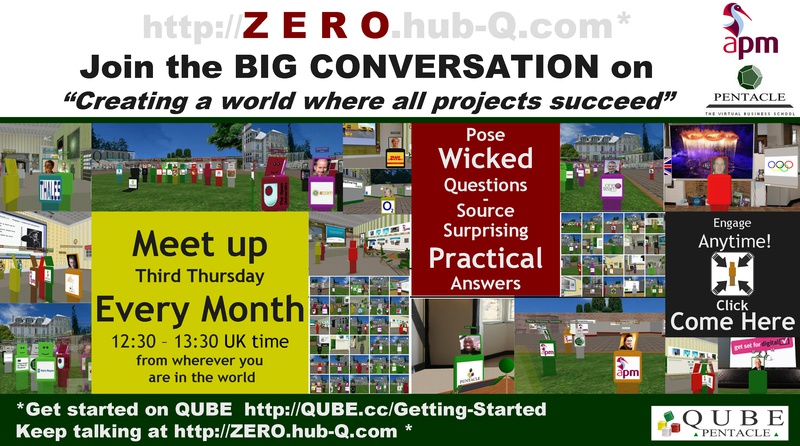
The doors are open and to kick off the Big Conversation about ZERO, "Creating a world where all projects succeed...".  We've invited all the participants of Conference: ZERO to add their questions, thoughts and comments to the ZERO_Community qubicle. If you're already on QUBE you can use this link ...

http://ZERO.hub-Q.com

The Big Conversation is open to all members of the APM, so join in and spread the aspiration.

Over the past two weeks the buzz has already begun - check out the comments and blogs (and tweets) on Conference: ZERO by Gower Publishing, Elizabeth Harrin, Andrew Hubbard, Eddie Obeng and Dave Gordon.

Eddie Obeng will be on QUBE, along with anyone else who's available to join in, from 12.30 - 13.30 UK time on Thursday 21st November, to curate, facilitate and begin to co-ordinate the conversation.

If you can't make the time and date, please leave us your thoughts and comments in advance on the Main Whiteboard.

Eddie will share a framework for themes,  language and researching the issue of "why not all projects currently succeed".  He will invite people to lead aspects of the conversation and act as nodes for the delivery of the vision.

We need Sponsors for the ZERO_Community to keep the momentum.  Is this you?  Perhaps someone in your organisation?  Please help us.  You can find out more about sponsorship at http://PentacleTheVBS.com/SponsorshipWithoutBoundaries.htm  and read what other sponsors say.

If you missed Conference: ZERO, there is a summary below, and you can find out more about the speakers and topics at http://PentacleTheVBS.com/ZERO.htm


Tuesday, 22 October 2013

Review of Conference: ZERO


193 attendees from China to Bahrain to Brazil.  30 speakers from Australia to France to the USA.  Saving over 65,000 miles of travel (three times round the world) and earning a **** rating

Last Thursday we were proud to host Conference: ZERO on behalf of the Association for Project Management on QUBE.  The aim of the TED-style conference was to start the BIG conversation on “Creating a world where all projects succeed.”

Here’s an overview of what happened on the day: 

There were many amazing keynote sessions, including ones from Bill Morris LVO on The Olympic Ceremonies, Peter White on Delivering the Digital Switchover Perfect Project, John Mathers on Design and Projects, Andrew Bragg on APM’s Ambitious Vision for the Profession, and Martin Baker on Life or Death Projects

Many participants experienced delays in getting on QUBE due to two of our cloud routers turning rogue, and some suffered annoying crashes. If this is you and you were frustrated (not a perfectly successful project for you ;-) ) please contact me, Eddie_Obeng@PentacleTheVBS.com .  I’d like to say sorry, ask you to forgive us - since we are just starting on this journey - and propose a treat!

We also had interactive and engaging sessions from practitioners from HeadcastLab, JP Morgan, O2, DHL, Ernst & Young, Capgemini, Novo Nordisk, Amari, MWH Global, bloggers, journalists and many more.

There were practical workshops run by the Pentacle team on tools and techniques for everything from overcoming resistance to change to predicting the future issues and ‘preliminating’ them.

Lots and lots of connections were made, tweets sent out on #ConfZERO, and discussions started. Visit the photo gallery at http://Pentacle.co.uk/ZEROpics.htm .  If you took pictures or video on the day, or have blogged or tweeted, please let me know and I'll add them to the website.

What next? 


Let’s keep the discussion going.  Let’s share ideas and learning. Let’s try to speak the same language to make it easier, using the themes of the conference: purpose, perspective, practitioner, people and performance.  You’re on QUBE now, it’s like being on Skype.  You can see who’s live and summon them with a “Come here”  to meet you (see icon to the right). And if you’re on your smart phone, you can always find out using http://QUBE.cc/Whos-on-Now/ 

I look forward to seeing you again, as a qubot, soon.


eddie

Professor Eddie Obeng 

Friday, 13 September 2013

Effort to Benefit


It’s been a while since you’ve seen each other but it’s great to have some time and a few drinks with one of the few people who have known you since before you had the keys to the front door of your parent’s house.  It’s also been a while since they made their transition to the C suite and finally to the top job.  So this isn’t just a catch up and gossip, “Do you know what happened to ..?”  “Guess who I met in a market in Morocco…” and so on but a chance to talk about life and work.
You get to go first.  You ramble on about the pressures of delivery and the lack of resource.  Moan about a couple of your team members and a particularly troublesome but essential contractor.  Now it’s your turn to listen. 
Your friend begins “They just don’t get it.  I’ll tell you two stories and you tell me if it’s me that’s mad
or them.”  You nod supportively

As you know I’ve just taken over a new division and it’s unbelievable what I’ve found.  The first thing I unearthed was a huge project.  They’d called it TeleHealthy.  Over the previous 3 years they’d spent a small fortune on a concept.  The concept was that with more mobile devices coming online a multi billion pound business could be created.  The design was an ‘all or nothing’ affair, the entire platform had to be developed before we could sell subscriptions.  This is not uncommon for this type of application.  The project has been hailed as a success, it delivered on time to budget and with the specifications intact.  But so far, after spending millions we have seven subscribers paying us £75 per year.  How did we get the business case so badly wrong? How did we not notice that we were developing from a hunch not an insight?  And another one in this one we were trying to be modern and trendy.  Admittedly the brief was a bit unclear but in that market because of the pace of change, it was always going to be.  The previous CIO had decided to adopt an agile approach without much understanding.  He was absolutely delighted with progress – gone was the old way of doing things where there was no outcome, nothing to see until you discovered that there really was ‘nothing to see’ now he had updates deliverables.  But in their haste they managed to create a package which was un-testable.  But they rolled it out anyway – saying that the early adopter customers would help them to identify the bugs and that they had created a large team for rapid bug fixing and applying patches. 
Three months later not only had the customers not had any real benefits from the offer.  The problems, complaints negative tweets and so on had so damaged to the reputation of the business that sales in all other products had declined by 10%

You shake your head in empathy.  Yes, there really is something not-quite-right.  It’s something to do with remembering why we initiated the change in the first place.  Something about looking beyond the effort of the project, looking all the way from the reason why the project was begun all the way through the project’s lifecycle, to the benefits which would be delivered.  That is the complete project.

In a world where every project succeeds we need to redefine projects to not only include the effort but also to include the benefits we are after.  We need to extend our projects even earlier to the wisdom in the spark of the ideas which give rise to the initiative behind them and widen them to consider the wider collateral damage they can cause

Thursday, 12 September 2013

Isolated to Integrated


They’ve been using the slogans for years. 'There are no IT projects just projects',  'There are no HR projects just projects', 'There are no Ops projects just projects', and yet.  And yet you’ve spent the last two weeks trying to get sign off and the stakeholders are doing everything they can think of to keep their thumbprints off the documents.  Why?  And on that last project it was almost impossible to get into the diaries of the key stakeholders, the one’s who’d asked for the project in the first place, the one’s who’d have to live with what you were doing… and yet all you wanted to do was to spend time with them talking about the implications of the project and looking back at some of the key decision you’d made to check that they were the right ones.   It’s strange for all the talk projects often end up as isolated islands in a sea of BAU (business as usual)  You pause you don’t get it.  Perhaps that’s how it will always be.  You know that in general people are afraid to be openly seen to be working hard on, or backing something that might fail. Perhaps that’s why it’s so difficult to get the rest of the organisation to take a real, active interest in the project.  Maybe they’re just too busy with today’s priorities to dedicate time to tomorrow’s.

But what it means in practice is that however hard you try you end up throwing stuff ‘over the wall’.  And then they throw it back!   It’s not sponsorship you’re after just more connectedness to the rest of the organisation, perhaps someone who speaks the local language of the function and has a deep understanding of how the project will alter the way things are.  Perhaps someone who can also help to look backwards at progress so far to understand what is being delivered….?

Somehow you have to find a way to ensure that participating in projects, even for people not part of the project team, is as much part of the day job as the day job!  Convincing them that BAU is now CAU – change as usual.


In a world where every project succeeds, our organisations need to be persuaded to work with the people leading the change.  Program managers and sponsors are key in providing this bridge.